
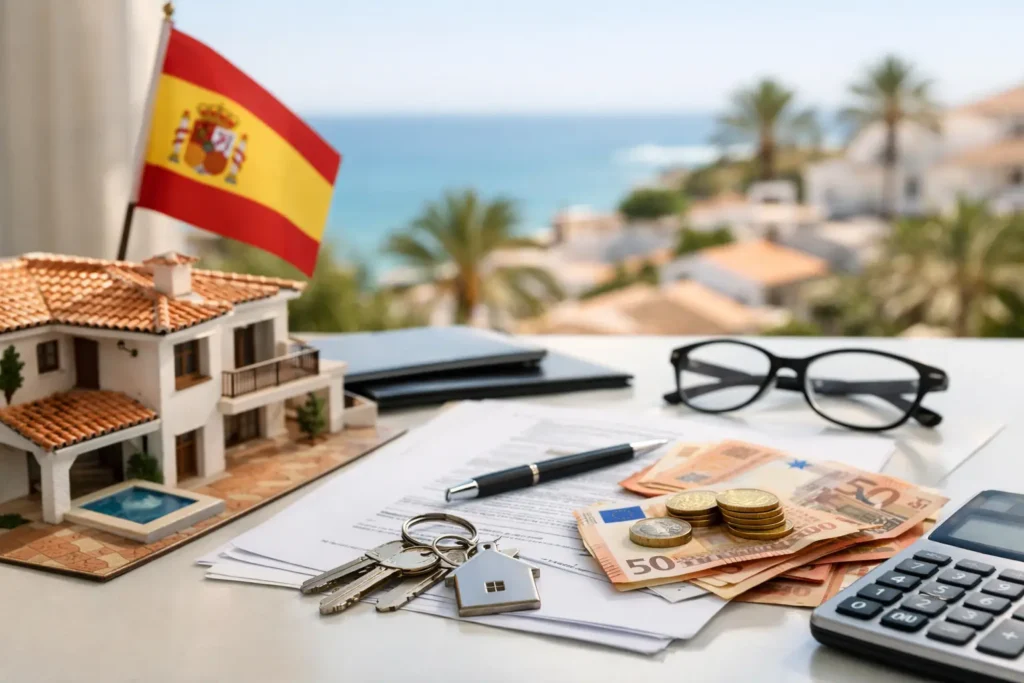
Most overseas buyers focus on the asking price first, then get an unpleasant surprise when the final bill is higher than expected. A proper guide to Spanish property purchase costs starts with one simple truth – the purchase price is only part of what you need to budget. Taxes, legal fees, notary charges, registry costs, and mortgage-related expenses can add a meaningful amount to the total.
The good news is that these costs are predictable when the purchase is handled correctly. The less good news is that they vary depending on where you buy, whether the property is new or resale, and how the transaction is structured. If you are buying from abroad, clarity at the start matters far more than guesswork halfway through.
Why Spanish property purchase costs catch buyers out
In Spain, transaction costs are not always presented in the simple, all-in way many international buyers expect. A property may look affordable on paper, but the real acquisition cost depends on regional taxes and the professional work required to protect the buyer.
That matters because cutting corners to save money at the buying stage can be expensive later. A legal issue, unregistered alteration, planning irregularity, or structural problem will always cost more to fix than to identify before completion. For that reason, the smartest way to approach costs is not to ask, “How little can I spend?” but “What do I need to spend to buy safely?”
A practical guide to Spanish property purchase costs
For most buyers, the additional costs of purchasing property in Spain often fall somewhere around 10 percent to 15 percent of the purchase price. That is a useful planning range, but it is still only a range. A cash buyer of a resale property in one region may pay a different total from a mortgaged buyer purchasing a new-build home in another.
The main costs usually fall into a few core categories: transfer tax or VAT, stamp duty in some cases, legal fees, notary fees, land registry fees, and possible mortgage costs. If the property needs a survey or technical inspection, that should also be part of the budget from the outset.
Transfer tax on resale properties
If you buy a resale property in Spain, the biggest extra cost is usually property transfer tax, known as ITP. This is charged by the regional government, which means the rate depends on the autonomous community where the property is located.
That regional variation is one reason buyers should be careful about relying on general advice pulled from forums or outdated articles. The percentage can differ quite a bit from one area to another, and in some regions there may be reduced rates for specific buyer profiles or purchase values. In practice, most international buyers should assume transfer tax will be one of the largest line items after the purchase price itself.
VAT and stamp duty on new-build properties
If you are buying a brand-new property from a developer rather than a resale home, the tax structure is different. Instead of transfer tax, you will generally pay VAT, plus stamp duty.
For most residential new-build purchases, VAT is typically 10 percent, while stamp duty varies by region. This is where buyers can be caught out. A new-build may appear attractive because of energy efficiency, warranties, and modern finishes, but the tax bill is often higher than expected once VAT and stamp duty are added together.
That does not mean new-build is a poor choice. It simply means the budgeting needs to be realistic. The right option depends on your goals, your timeline, and how much value you place on lower maintenance, developer guarantees, or immediate character and location.
Legal fees, notary fees, and registry charges
Alongside taxes, professional and administrative costs form the second major part of the budget.
Legal fees are one of the most important costs because they pay for buyer-side due diligence. Your attorney should verify ownership, charges against the property, planning status, community debt, tax status, contractual terms, and completion arrangements. Fees vary by firm and by complexity, but they are not the place to shop on price alone. The issue is not simply getting the paperwork done. It is making sure someone is acting in your interest and identifying risks before you are committed.
Notary fees in Spain are regulated and are usually based on the property value and the act being formalized. The notary does not act as your personal adviser. Their role is to formally witness and certify the transaction. That is why independent legal advice remains essential even though a notary is involved.
Land registry fees are also regulated and are charged to record the new ownership officially. This step matters because registration protects your legal title. A purchase is not truly finished just because funds changed hands at completion.
Mortgage-related costs
If you are financing the purchase with a Spanish mortgage, the cost picture changes again.
In recent years, some mortgage setup expenses that were once passed to buyers have shifted more toward lenders, but borrowers still need to budget carefully for valuation fees, arrangement-related charges in some cases, bank products tied to lending, and the practical costs of managing the mortgage process. You may also face currency transfer costs if your income or savings are held outside the eurozone.
For overseas buyers, mortgage affordability should never be based only on the headline rate. Exchange rate movement, banking requirements, and the timing of stage payments can all affect the real cost of borrowing.
Survey and technical inspection costs
A survey is not a tax, but it belongs in any serious guide to Spanish property purchase costs because it helps protect the largest part of your investment.
Many overseas buyers assume that if a property looks attractive and the legal paperwork appears straightforward, that is enough. It is not always enough. Structural movement, damp issues, roof problems, illegal additions, terrace enclosures, retaining wall defects, or poor renovations may not be obvious during a viewing, especially if you are unfamiliar with local construction styles.
A proper technical inspection can save far more than it costs. It may confirm that the property is sound, give you leverage in negotiations, or stop you from buying a property that will become a financial drain. For clients buying at distance, this is often one of the most valuable parts of the process.
Regional differences and hidden variables
One of the biggest mistakes buyers make is assuming that Spain has one uniform system. It does not. Property taxes and practical buying costs can vary by region, and so can local planning history, municipal compliance, and the way documents are managed in practice.
Then there are the hidden variables. Community fees are not purchase costs in the strict sense, but unpaid community debts need checking. Utility reconnection or contract transfer costs may arise after completion. If you are buying a rural property, there may be added complexity around boundaries, access rights, septic systems, or planning history. If you are purchasing through a company or considering a mixed-use or investment structure, professional advice becomes even more important.
These details are exactly why a cost estimate should be tailored to the specific property, not pulled from a generic percentage alone.
How to budget safely before you commit
The safest approach is to work backward from your true all-in budget rather than stretching to the highest purchase price you think you can afford.
If your total budget is fixed, reserve a clear amount for taxes and transaction costs first. Then calculate the maximum property price that still leaves room for proper legal work, technical checks, and post-completion setup. That way, you avoid falling in love with a property only to discover later that completion funds are too tight.
It also helps to ask for a property-specific cost breakdown before you pay a reservation deposit. At that point, you want clarity on whether the property is resale or new-build, the likely regional taxes, legal fees, notary and registry estimates, and any mortgage or survey costs that apply. A dependable buyer-side adviser should be able to help you see the full picture early, not after commitments have been made.
For many international buyers, that independent oversight is what brings the process under control. Search and Survey Spain is built around that buyer-first approach, helping clients understand not just what a property costs, but what it takes to buy it properly.
The right property in Spain should feel exciting, not financially vague. When your costs are clear from the start, you make better decisions, negotiate from a stronger position, and move toward completion with confidence instead of crossed fingers.
Need Help? 🙂

Hi, this is Ian Mason.
If you have any questions, please feel free to contact us by clicking HERE and I’ll get back to you shortly. Thank you!
Get in touch ?