
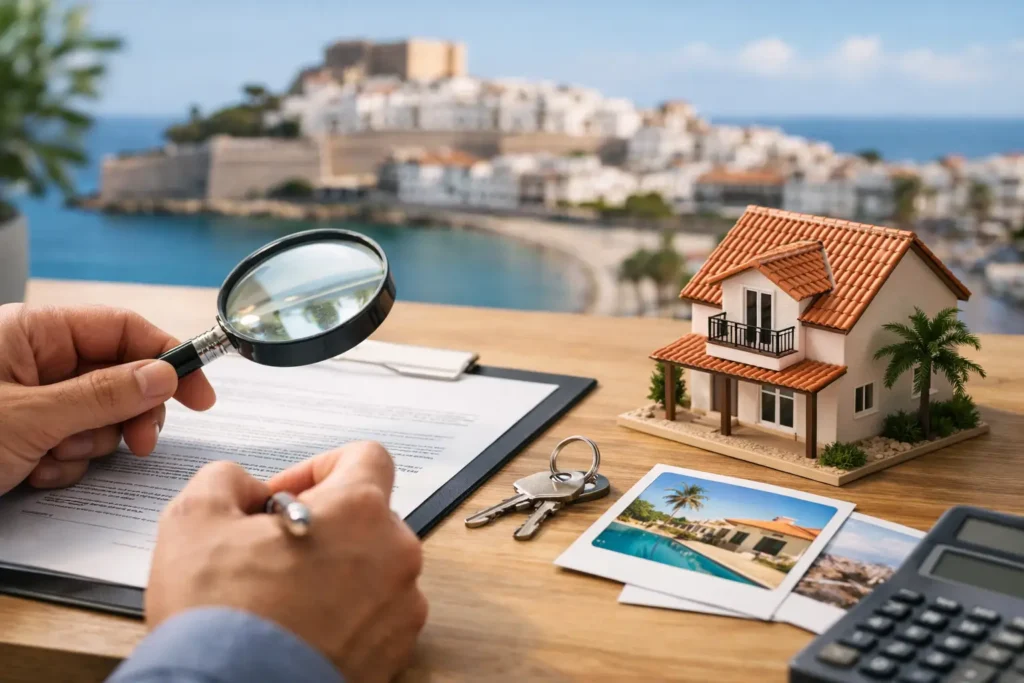
A property can look perfect in a video tour: sea view, freshly painted walls, an attractive price, and an agent urging you to reserve it before someone else does. But in Spain, the greatest risks are not always obvious from the listing. They can sit in the land registry, the planning file, the wording of a reservation contract, or an informal request to send money quickly.
Knowing how to avoid property scams in Spain is less about assuming everyone is dishonest and more about following a disciplined buying process. Most problems can be prevented when you verify the people involved, investigate the property before paying a deposit, and make every commitment conditional on satisfactory checks.
1. Treat a low price and urgency as warning signs
A genuine seller may need a quick sale. A well-priced property may also attract immediate interest. Neither fact proves a scam. The concern arises when the price is far below comparable homes and the explanation is paired with pressure: an owner is supposedly abroad, several buyers are waiting, or a deposit must be transferred today to a personal account.
Pause and compare the property with similar homes in the same area. Ask why it is being sold, how long it has been on the market, and whether there are known defects or legal issues affecting the value. A legitimate transaction can withstand sensible questions and reasonable time for professional checks.
Do not let the fear of missing out turn a viewing into a financial commitment. In Spanish property buying, a reservation payment is often the first moment at which a buyer becomes exposed. That payment should follow verification, not replace it.
2. Confirm who is selling and who is representing you
Spain has many capable real estate agents, but traditional agents generally act for the seller or have a commercial interest in completing the sale. They may help with logistics, but they are not automatically your independent representative.
Ask directly who the agent represents, what commission they receive, and whether they have a written mandate to market the property. Verify the office details, business identity, and contact information rather than relying only on a listing portal, social media profile, or messaging app.
More importantly, appoint an independent Spanish property lawyer and, where appropriate, a buyer-side adviser before you sign or transfer funds. Their role is to protect your interests, not to keep a sale moving. This separation matters when an issue is uncovered and the right advice may be to renegotiate or walk away.
3. Verify ownership before paying a deposit
A seller cannot safely sell what they do not own, and ownership is not something to take on trust. Your lawyer should obtain an up-to-date extract from the Property Registry, known as a nota simple, and compare it with the seller’s identification and title documentation.
This check helps establish the registered owner, the legal description of the property, and any recorded mortgages, embargoes, rights of way, or other charges. It can also reveal whether the property is held by multiple owners, a company, or an estate following a death. Each scenario may require different documents and signing authority.
The registry is essential, but it is not the whole picture. The actual property, its boundaries, and its municipal description should also be checked. A pool, extension, terrace enclosure, storage room, or parking space shown during a viewing may not be included in the legal title.
4. Check planning status and legality, especially for rural homes
Some of Spain’s most appealing homes are older villas, country properties, and houses that have been extended over time. They can also carry the most complex planning questions. An attractive outbuilding may have no permission. A house may not meet current occupancy requirements. Land classification may limit rebuilding, expansion, or tourist use.
Before committing, establish whether the main building and relevant additions are legal, properly recorded, and consistent with local planning rules. The precise checks depend on the municipality and autonomous region, so there is no single national shortcut. Properties on rustic land deserve particular care because their rules can differ substantially from those in an urban area.
If you plan to rent the property, run a business from it, renovate it, or add a pool, investigate those plans before purchase. The fact that a previous owner did something does not mean you will be permitted to continue it.
5. Never send money without a written, reviewed agreement
A reservation fee or deposit should not be a casual bank transfer supported only by an email or WhatsApp message. Before funds leave your account, you should know exactly who receives them, where they will be held, the purpose of the payment, and the circumstances in which it is refundable.
A properly drafted agreement should identify the property, purchase price, parties, deadlines, and conditions. It should also say what happens if legal, planning, financing, or survey findings are unsatisfactory. Do not assume that a document described as a “reservation” is harmless. Its practical effect depends entirely on its wording.
Be particularly cautious if anyone asks you to transfer money to an individual account, an account in another country, or a bank account that does not match the named seller or properly identified professional. Confirm bank details independently using a trusted phone number, not a number supplied in a last-minute email. Payment diversion fraud can occur when criminals impersonate an agent, lawyer, or seller and send false instructions.
6. Get an independent survey, not reassurance from the seller
A property can have a clean title and still be a poor purchase. Damp, roof defects, drainage issues, unapproved alterations, aging electrics, structural movement, and poor access can change the real cost of ownership.
A qualified independent surveyor can assess the condition of the building and highlight defects that are easy to miss during a short viewing. This is particularly valuable when buying remotely, purchasing an older property, or considering a home that has recently been renovated. Fresh paint is not evidence that underlying issues have been resolved.
A survey does not always mean you should abandon the purchase. It may provide a basis to renegotiate the price, request repairs, budget realistically, or choose a different property. What matters is receiving objective information before you are contractually bound.
7. Check debts attached to the property
Buyers should establish whether there are outstanding local property taxes, community fees, utility bills, or other liabilities connected with the home. In an apartment or urbanization, ask for documentation showing that community charges are up to date and understand any planned major works, such as façade repairs, elevator replacement, or pool renovations.
A low monthly community fee is not always a benefit if the development has deferred maintenance and a special assessment is approaching. Review the community rules as well. They may affect pets, renovations, parking, or short-term rentals.
Your legal and financial checks should also clarify which costs will be paid by the seller and which will fall to you at completion. A clear completion statement prevents surprises and makes it easier to see whether every agreed item has been included.
8. Use a power of attorney carefully
Many international buyers complete their Spanish purchase through a power of attorney. This can be practical when travel is difficult, but it should be prepared and used with care. Give authority only to a trusted, properly identified professional and ensure you understand its scope.
A power of attorney can be limited to a specific property and transaction rather than granting broad authority. Ask who will hold your funds, what approvals are required before contracts are signed, and how you will receive copies of signed documents and completion statements.
The goal is not to make the process more complicated. It is to preserve your control when you are not physically present.
9. Complete through the notary, then finish the job
The notary is a key part of a Spanish property completion, but a notary does not replace your own lawyer, surveyor, or buyer representative. The notary formalizes the public deed and checks certain legal requirements. They do not carry out the full buyer-side investigation into condition, planning, negotiation, or whether the property suits your objectives.
After signing, make sure the deed is submitted for registration, taxes are handled correctly, utilities are transferred, and relevant local records are updated. A purchase is not truly stress-free if unresolved post-completion tasks leave you dealing with bills, access problems, or administrative confusion months later.
How to avoid property scams in Spain when buying from abroad
Distance adds another layer of risk because you are relying on photographs, virtual tours, and unfamiliar professionals. Whenever possible, view the property in person and meet the people handling the transaction. If you cannot travel, use independent professionals who can inspect, report, and communicate directly with you rather than relying solely on the selling side.
Keep a written record of every offer, instruction, document, and payment. Be wary of requests to move conversations away from official email channels or to change banking details at short notice. A calm, documented process may feel slower than a rushed deal, but it is almost always cheaper than correcting a mistake after completion.
At Search and Survey Spain, buyer representation is built around this principle: the person advising you should be firmly on your side. The right property is not simply the one you can reserve quickly. It is the one you can buy with clear information, appropriate protections, and confidence in what you are taking on.
Need Help? 🙂

Hi, this is Ian Mason.
If you have any questions, please feel free to contact us by clicking HERE and I’ll get back to you shortly. Thank you!
Get in touch ?